Table of Contents
- 1. Lemon Butter Pasta with Parmesan
- 2. Cherry Tomato Baked Pasta
- 3. Pea and Turkey Bacon Pasta
- 4. Mushroom Garlic Pasta
- 5. Arugula Walnut Pasta
- More Quick Sauce Formulas Beyond These Five
- Smart Timing: What to Do While the Pasta Boils
- The Weeknight Pasta Pantry
- Tip for weekly planning
- Meal Prep and Freezing: What Actually Works
- Ingredient Swaps for Every Need
- Storage and Reheating Tips
- Frequently Asked Questions
- Bottom line
After a full day with kids, dinner should above all be one thing: quick to make and still good. These five recipes get by with just a few high-quality ingredients and are on the table in under 25 minutes – no jarred sauce involved.
My honest opinion after cooking my way through more weeknights than I can count: these five aren't just "fast enough" – they're the ones I'd genuinely choose to eat even on a day with plenty of time to cook.
1. Lemon Butter Pasta with Parmesan
Cook spaghetti al dente, toss with browned butter, lemon zest, lemon juice, and plenty of parmesan. Bind it creamy with a splash of pasta water. Ready in 15 minutes. If I had to keep only one recipe from this whole list, honestly, it would be this one – it tastes like it took real effort and it barely takes any.
2. Cherry Tomato Baked Pasta
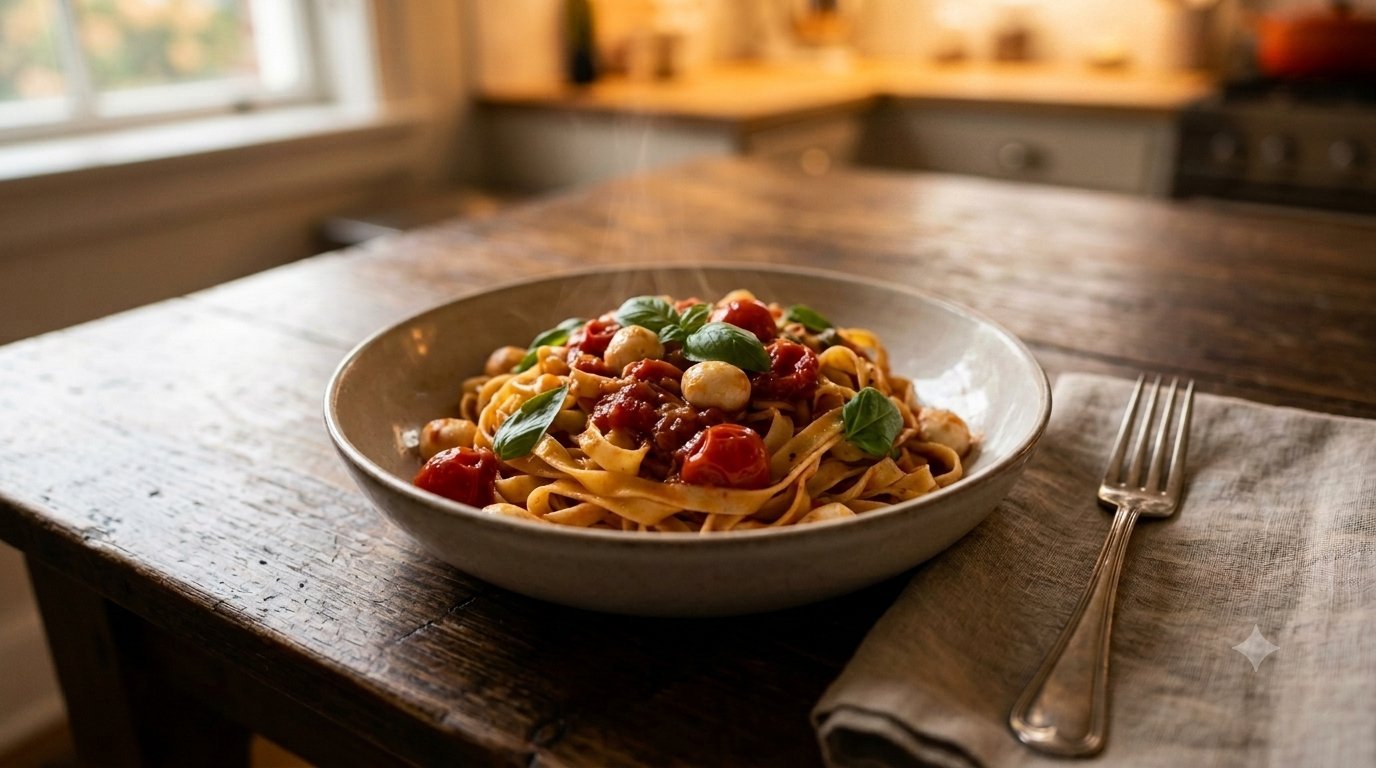
Roast cherry tomatoes with olive oil, garlic, and feta in the oven while the pasta cooks. Mash everything together and mix in basil – a one-pan recipe with minimal effort.
3. Pea and Turkey Bacon Pasta
Render turkey bacon until crisp, briefly fry frozen peas with it, deglaze with cream and a bit of nutmeg, and mix with the pasta. Kids especially love this one. What convinces me about this recipe specifically is how forgiving it is – even a slightly overcooked batch of peas doesn't really hurt the dish, which matters a lot on a chaotic evening.
4. Mushroom Garlic Pasta
Sear mushrooms until browned, deglaze with garlic, thyme, and a splash of vegetable broth, finish with crème fraîche. Quick, hearty, everyday-friendly.
5. Arugula Walnut Pasta
Roughly chop and toast walnuts, blend with arugula, olive oil, and parmesan into a rough pesto, then fold into the warm pasta – raw, fresh, ready in five minutes.
More Quick Sauce Formulas Beyond These Five
These five recipes are really just a starting point. Once the underlying logic clicks, you barely need a recipe for the rest of the week – just a handful of reliable formulas you can build around whatever is sitting in the fridge or pantry. These five combinations get us through busy weeks on repeat. In my experience, this is the part that actually changes how you cook long-term – recipes get you through one dinner, but a formula you understand gets you through a whole month of them.
Garlic and Oil (Aglio e Olio)
The simplest sauce there is, and also the most reliable one when the fridge is nearly empty. Let sliced garlic turn golden slowly in plenty of olive oil over low heat, adding chili flakes if you like some heat. Pour in a generous ladle of pasta water and let it reduce slightly, then toss the drained pasta through until the sauce clings and thickens. Parsley, a squeeze of lemon, and grated parmesan turn it into a full dinner in about ten minutes. The only real rule is patience – if the garlic browns too fast, pull the pan off the heat rather than risk bitterness. Honestly, I'm not a fan of recipes that pretend timing doesn't matter here – it does, but once you've burned garlic once you never forget how to avoid it again.
Anchovy Butter
Anchovies from a jar sound like a hard sell to a lot of people, but they melt almost completely into hot butter and leave behind not a fishy taste but a savory depth that would otherwise take hours of simmering to build. Let a few fillets break down in butter over medium heat, add garlic and a pinch of chili, loosen with pasta water, and toss with the noodles. Even the anchovy skeptics at the table usually can't tell what gave the dish its backbone.
Cream Cheese Sauce
For the nights that need to move even faster: stir a few spoonfuls of cream cheese into hot pasta water until it turns silky, then season generously with black pepper and a little grated cheese. A spoonful of mustard or some lemon zest stirred in works well too. This sauce doesn't need its own pan or any cook time – it comes together right in the serving bowl with the finished pasta, and its mild, faintly sweet flavor tends to go over well with younger kids. This is my personal go-to on the nights I'm running on fumes – it's the closest thing on this list to a sauce that makes itself.
Pesto and Cream
A jar of green or red pesto stretches nicely with a splash of cream or crème fraîche, which softens its intensity – useful if straight pesto reads as too strong for some eaters at the table. Warm the pesto and cream together in a pan, thin with pasta water to the consistency you want, and toss with the pasta. A scatter of toasted pine nuts or chopped walnuts on top adds welcome texture.
Egg and Cheese, Cacio e Pepe Style
This one takes a little practice, but once it clicks it's the fastest of the bunch: whisk plenty of grated pecorino or parmesan with a generous amount of freshly cracked black pepper and a splash of starchy pasta water into a smooth paste, then fold it through pasta that's hot but no longer boiling. The trick is temperature – too hot and the cheese seizes, too cool and the sauce won't bind. If you're not confident yet, pull the pan off the heat before stirring in the cheese and work quickly with tongs.
All five formulas really come down to the same logic: fat – oil, butter, or cream – meets something salty or savory like cheese, anchovies, or bacon, and gets pulled together with starchy pasta water into a sauce that clings to the noodles instead of pooling at the bottom of the bowl. Once that logic is second nature, almost anything in the fridge can become a pasta sauce without a recipe in sight.
Smart Timing: What to Do While the Pasta Boils
The nine to twelve minutes most pasta shapes need to cook is more time than it looks like at first glance – as long as you actually use it instead of standing next to the pot waiting. Once those minutes become a set rhythm instead of dead time, sauce and noodles start finishing at almost exactly the same moment without much extra thought. What I like about thinking of it this way is that it stops the pasta pot from being dead time you just wait through – it becomes the timer that runs the whole rest of dinner.
The Sequence That Always Works
Get the water on and salt it generously first, and chop onions, garlic, or vegetables while it comes up to a boil. Once the water's boiling, add the pasta and start tracking time from that moment – the package instructions are the most reliable timer in the house. While the noodles cook, build the sauce in a second pan: sear whatever needs browning first, then deglaze and let it reduce, timed so the sauce is ready right when the pasta hits al dente. Just before draining, set aside a cup of pasta water – then move the pasta straight into the sauce pan rather than the other way around, so everything comes together properly over the heat before serving.
Handle Whatever Else You Can in the Meantime
While the water heats and the pasta cooks, it's a good window to set the table, clear lunch dishes, or wash a salad – the actual active cooking time for these recipes fits almost entirely inside the time the pasta spends in the pot anyway. It can also help to keep a bowl by the stove for scraps and trimmings as you go, so cleanup doesn't pile up at the end. On the kind of day when patience is already running thin, that small bit of organization is often what separates a relaxed dinner from a frantic one.
Tools That Actually Save Time
A genuinely sharp knife makes a bigger difference chopping onions, garlic, and vegetables than any gadget, simply because it saves the extra time a dull one costs in re-cutting and cleanup. A garlic press, a coarse grater for cheese, and a colander kept within reach of the sink rather than buried in a cupboard cut down on the small motions that add up the most on a hectic evening. None of this equipment is expensive or unusual, but together it's what keeps the actual cooking time close to the ten to fifteen minutes these recipes promise.
The Weeknight Pasta Pantry
The biggest time drain on a weeknight usually isn't the cooking itself – it's figuring out what's actually in the house to cook with. A well-stocked pantry means a proper pasta dinner is almost always within reach, no shopping list or extra store run required. These are the ingredients worth always having on hand. My personal take is that this section matters more than any single recipe in this article – a stocked pantry is what turns "I don't know what to cook" into a non-issue on a Tuesday night.
Dry Pantry
A few different pasta shapes – long ones like spaghetti for creamy or oily sauces, short ridged ones like penne or fusilli for anything chunky that needs to catch in the grooves. Good olive oil, a neutral oil for searing, garlic, onions, a jar of capers, a few cans of whole peeled tomatoes, a jar of anchovy fillets, dried herbs like oregano and thyme, chili flakes, a stash of nuts like walnuts or pine nuts, and a hard wedge of parmesan or pecorino that keeps for weeks in the fridge. Add a jar of tomato passata and a jar of pesto to that list, and you can put something warm on the table even on a day when the fridge looks completely bare.
Spices and Flavor Builders
A few seasonings make the difference between a sauce that tastes flat and one that tastes intentional: chili flakes for heat you control, dried oregano and thyme for that familiar Italian backbone, smoked paprika for depth in tomato sauces, and a coarse sea salt that's easier to judge by feel than fine table salt. A jar of capers or sun-dried tomatoes in the cupboard can turn even the plainest sauce into something more interesting with almost no extra effort.
Fridge
Butter, cream or crème fraîche, cream cheese, grated cheese, and eggs form the backbone of most quick sauces. Beyond that, a handful of sturdy vegetables that outlast lettuce and fresh herbs are worth keeping stocked – carrots, zucchini, mushrooms, and lemons earn a permanent spot in our fridge because they're versatile and don't wilt the moment a week runs busier than planned.
Freezer
Frozen peas and spinach are probably the most underrated weeknight saviors there are: already washed and trimmed, they keep for months, and go straight from the bag into a hot pan with no thawing required. Add a pack of bacon or chicken breast in the freezer, plus a loaf of bread for anything that needs to round out the meal, and the foundation for a full dinner is always there – even on the kind of week where nobody's made it to the store in days. I'd genuinely rank frozen peas above most kitchen gadgets in terms of what actually saves a weeknight – unglamorous, but it never once has let me down.
Making Fresh Herbs Last Longer
Fresh herbs are usually the ingredient that wilts fastest, even though they only show up at the very end of a sauce. Basil keeps for days standing in a glass of water on the counter like a bunch of flowers, while parsley or chives wrapped in a damp paper towel and stored in the fridge stay fresh noticeably longer than left loose in their plastic bag. If herbs regularly go to waste, chopping them finely with a little oil and freezing in an ice cube tray keeps a small portion on hand any time, no extra shopping trip required.
Tip for weekly planning
All of these recipes prep well in advance: shop for and portion the ingredients on the weekend, then just combine them during the week. That saves precious minutes on busy evenings.
Meal Prep and Freezing: What Actually Works
Batch cooking can sound like something for people with a lot more free time, but it works just as well in small doses folded into an ordinary week. Not every sauce, and definitely not cooked pasta itself, freezes equally well – knowing which is which saves you from disappointing results and wasted leftovers. My honest take: batch cooking gets oversold as an all-or-nothing lifestyle, when really the freezer just needs to hold two or three things you actually use.
What Freezes Well
Tomato-based sauces are the most forgiving candidates for the freezer: a bigger batch of a simple tomato sauce with garlic and herbs holds up for months portioned out and barely loses flavor. Pesto without cheese also freezes well, especially portioned into an ice cube tray so you can pull out single servings without thawing the whole jar. Meaty, bolognese-style sauces and roasted, mashed vegetable sauces like the cherry tomato bake in this article freeze well too, as long as they're made without cream – that's easy enough to stir in later when reheating.
What's Better Made Fresh
Cream- and cheese-based sauces tend to split or turn grainy after freezing and reheating – slow, gentle reheating and vigorous stirring can partly rescue them, but they're never quite as silky as they were fresh. Freezing already-cooked pasta itself generally isn't worth it either: it loses its bite and often turns mushy once thawed. It's more useful to prep only the sauce ahead of time and cook the noodles fresh – that step only takes about ten minutes anyway, and it's the part of the process that saves the least time by doing it in advance.
Portioning Sauce for the Freezer
To make frozen sauce genuinely useful later, portion it out in meal-sized amounts before freezing – spread flat in freezer bags, it also takes up less space and thaws faster than sauce frozen in a deep container. A label with the date and contents saves you from playing guessing games in the freezer later. For smaller amounts, like leftover pesto, ice cube trays work well: once frozen, the cubes transfer easily into a freezer bag and can be pulled out one at a time as needed, no need to thaw the whole batch.
Ingredient Swaps for Every Need
Not every household eats the same way, and that's exactly as it should be. The five recipes above adjust easily to just about any diet or preference at the table with a few simple swaps. I like that none of these swaps require a separate recipe – to me, that's the real test of whether a base recipe is actually worth keeping around.
Vegetarian and Plant-Based
Turkey bacon swaps easily for smoked tofu, roasted chickpeas, or simply more mushrooms, which pick up a similarly savory, faintly smoky note when seared hard. For the creamy versions, oat- or cashew-based cream alternatives usually work well, though they're best added toward the end of cooking, since some varieties can split under prolonged high heat. Parmesan can be swapped for nutritional yeast or a plant-based hard cheese, though the flavor shifts noticeably – it's worth experimenting to find what your family actually likes.
Gluten-Free
Gluten-free pasta made from corn, rice, or lentils behaves a little differently than wheat pasta: it softens faster and is more prone to clumping if it sits too long in the water or isn't combined with sauce right away. Aim for the lower end of the package's cooking time rather than the upper end, and toss the noodles with hot sauce the moment they're drained rather than letting them cool. Pasta water from gluten-free noodles also tends to be starchier and cloudier than usual, but it still binds sauces just as well.
For Picky Eaters and Hidden Vegetables
When vegetable pieces get flatly rejected, it often helps to make them disappear rather than leave them out entirely: carrots, zucchini, or even sweet potato can be simmered or roasted until soft and blended smooth, so they stir invisibly into a tomato or cream sauce without changing the color or texture much. With the pea and turkey bacon pasta, simply mashing the peas a little finer is often enough if they're rejected whole. The main thing is patience – one well-hidden spoonful of vegetables per portion pays off more over time than one dramatic attempt with visible pieces.
Lighter, Lower-Sodium Versions
For anyone cutting back on salt for health reasons or cooking for young kids, skipping the bacon, anchovies, or heavily salted cheese and leaning instead on lemon zest, freshly cracked pepper, toasted nuts, or a splash of good vinegar keeps the flavor interesting without relying on salt to carry it. A homemade tomato sauce made without added salt is also easy to season individually at the table, which comes in handy when one portion needs to stay milder than what the rest of the family is eating.
Most of these swaps combine freely – a vegetarian, gluten-free version of the mushroom garlic pasta with finely blended vegetables in the sauce is just as doable as any single change on its own. It's worth changing only one variable at a time on the first attempt, so you actually learn what your family likes.
Storage and Reheating Tips
How leftovers get handled often decides whether the second meal tastes just as good as the first – or like reheated pasta can taste when it's done carelessly. Honestly, this is one section I wish more recipe sites bothered writing at all, since leftovers are where half of real weeknight cooking actually happens.
Storing
Pasta cools down fastest, and stores best, spread out in a shallow, wide container rather than left in a deep pot. Sauce and noodles can be stored together or separately – kept apart, the pasta stays a little more al dente; combined, it saves a container. In a well-sealed container, cooked pasta keeps in the fridge for about three to four days. A light drizzle of olive oil stirred through before it cools keeps the noodles from fusing into one solid clump.
Reheating
The microwave is the fastest option but not always the gentlest – a splash of water or milk in the bowl, plus a lid or plate over the top, keeps the pasta from drying out. A pan works even better: warm over medium heat with a little water, broth, or a spoonful of cream, stirring occasionally until the sauce turns creamy again. If you save a little pasta water in the fridge from the original cooking, it's already exactly the starchy liquid that makes reheated sauces smooth again. For the cherry tomato baked pasta specifically, the oven beats the microwave – around 350°F (180°C), covered with foil, keeps the texture much closer to the original.
Creative Ways to Use Up Leftovers
Not every last portion of pasta has to come back exactly the way it went into the fridge. Tossed cold with a little extra oil, lemon juice, and some crunchy vegetables, almost any pasta sauce turns into a quick pasta salad for a lunchbox the next day. Pan-frying leftover pasta with a beaten egg and a little cheese until golden on both sides turns it into a kind of pasta frittata that holds up well eaten cold too. Both ideas turn a small amount of leftovers that wouldn't quite make a full portion into a complete little meal instead of something that gets thrown out.
Frequently Asked Questions
How do I stop reheated pasta from turning soggy or gluey?
The key is liquid: without a splash of water, broth, or cream when reheating, the sauce dries out and the pasta turns either tough or mushy. Reheat in a pan over medium rather than high heat, stirring or tossing regularly, instead of blasting it once with quick, high heat.
What pasta shape works best for quick weeknight sauces?
As a rule of thumb, long, smooth noodles like spaghetti or linguine suit creamy or oily sauces that wrap around the strands, while short ridged shapes like penne or fusilli hold onto chunkier sauces with vegetables or bacon better. For spontaneous weeknight cooking, it's worth keeping a bit of both on hand.
Can I freeze the sauces from this article without issues?
Tomato-based and roasted vegetable sauces like the cherry tomato bake freeze well portioned out. Creamy or cheese-based sauces like the lemon butter pasta or the pea and turkey bacon pasta tend to lose some of their creaminess when frozen and taste noticeably better made fresh.
How much pasta should I plan per person?
For a main meal, a common guideline is around 80 to 100 grams (about 3 ounces) of dry pasta per adult, with less for kids. If you like having leftovers for the next day or especially hungry eaters at the table, plan a bit more generously, since extra pasta reheats without any trouble.
How do I get more vegetables into the pasta without a protest at the table?
The most reliable approach is to blend vegetables smooth and work them into a sauce that's already a similar color, like carrots or sweet potato in a tomato sauce. Small, visible pieces hide well in sauces with lots of other textures, like tucked between bacon and peas.
What if there are no fresh herbs in the house?
Dried herbs are a perfectly good substitute, but they should go in earlier in the cooking process than fresh ones would, so they have time to release their flavor – best added along with the garlic or vegetables rather than sprinkled on at the very end.
Why does almost every one of these recipes mention pasta water?
The water pasta cooks in picks up starch released by the noodles as they cook. That starch helps oil, butter, or cream bind with the sauce into a smooth, clingy texture that coats the pasta instead of pooling at the edge of the plate. A small ladleful, saved before draining, makes a noticeable difference in almost any sauce.
What should I watch for when cooking gluten-free pasta?
Gluten-free noodles soften faster than regular wheat pasta and clump more easily if they sit too long without sauce after draining. Stick to the shorter end of the package's cooking time and toss the noodles with hot sauce right away.
Bottom line
Five reliable recipes are often more useful than an overstuffed cookbook. This selection covers a whole work week – simple, high-quality, and stress-free.
Once you've worked through these recipes, sauce formulas, and pantry tips, one thing becomes clear: weeknight dinner doesn't have to be a choice between takeout and a fully planned meal-prep routine. With a well-stocked pantry and a few principles you've internalized, a real, home-cooked dinner lands on the table in about the same time a delivery would take anyway. In the end, it matters less that every recipe gets followed exactly and more that the underlying idea sticks: good base ingredients, a little preparation, and a rhythm that doesn't need reinventing every single evening. That's what turns five recipes into a kitchen that holds up reliably even on the hardest days. My personal take, after years of weeknight dinners: the goal was never to become a better cook in some abstract sense, just to make dinner one less thing to dread by the time evening rolls around.
Save on Pinterest →
Comments